[ CASE STUDY ]
Modular House Renders and a Configurator: the Unno Case Study
Unno is a modular house brand that Riser built from scratch. We created renders of nine house designs, an animation for each of them, an interior film that took the place of a show home, and a configurator based on dynamically swapped PNG layers. The entire Unno website is built on this material today.
Building a New Brand for a House Manufacturer
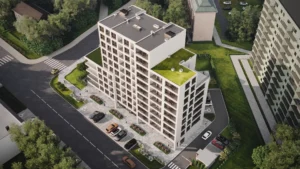
Riser is a general contractor from Jaworzno, Poland. Day to day it builds industrial halls, public buildings, residential blocks and timber-frame office buildings. Alongside that, the company launched its own factory and the Unno brand: ready-made timber-frame and modular homes built in southern Poland.
A company that has been delivering buildings for investors for years knows construction inside out. Selling a home to a private buyer is a completely different game, though. That buyer doesn’t read technical documents; they imagine what it will be like to live in the house. The Unno brand needed images that would build that picture.
Our work together began in 2023 with a quote request and a video call, where we agreed what Unno needed and where to start.
The Same House, a Completely Different Impression
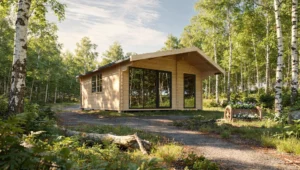
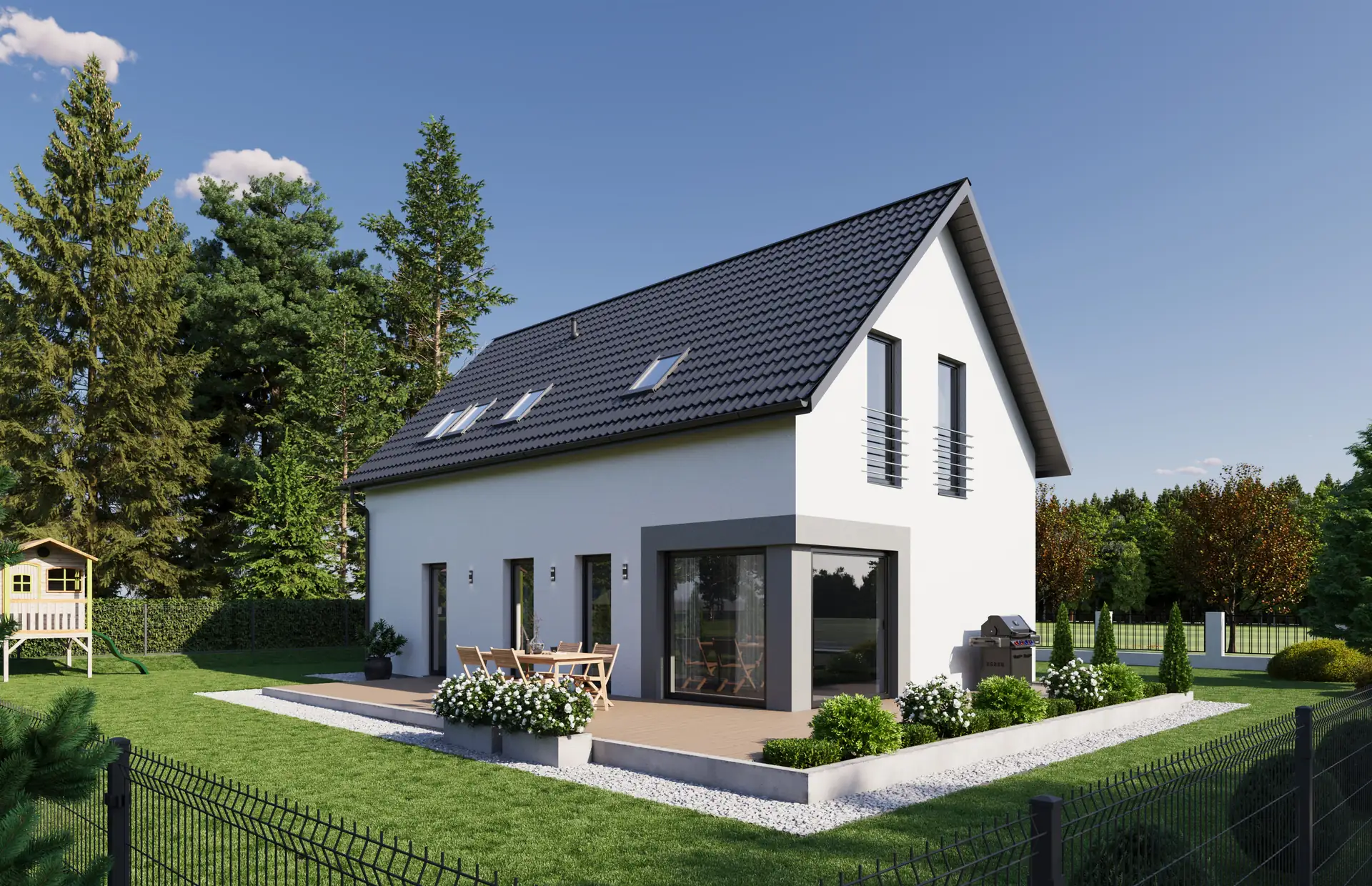
We started with four house designs. Each already had renders, but weak ones. The goal was easy to describe and hard to achieve: in the new images the same house had to look completely different. We didn’t change the architecture, only the way we showed it: the light, the setting, the materials and the framing.
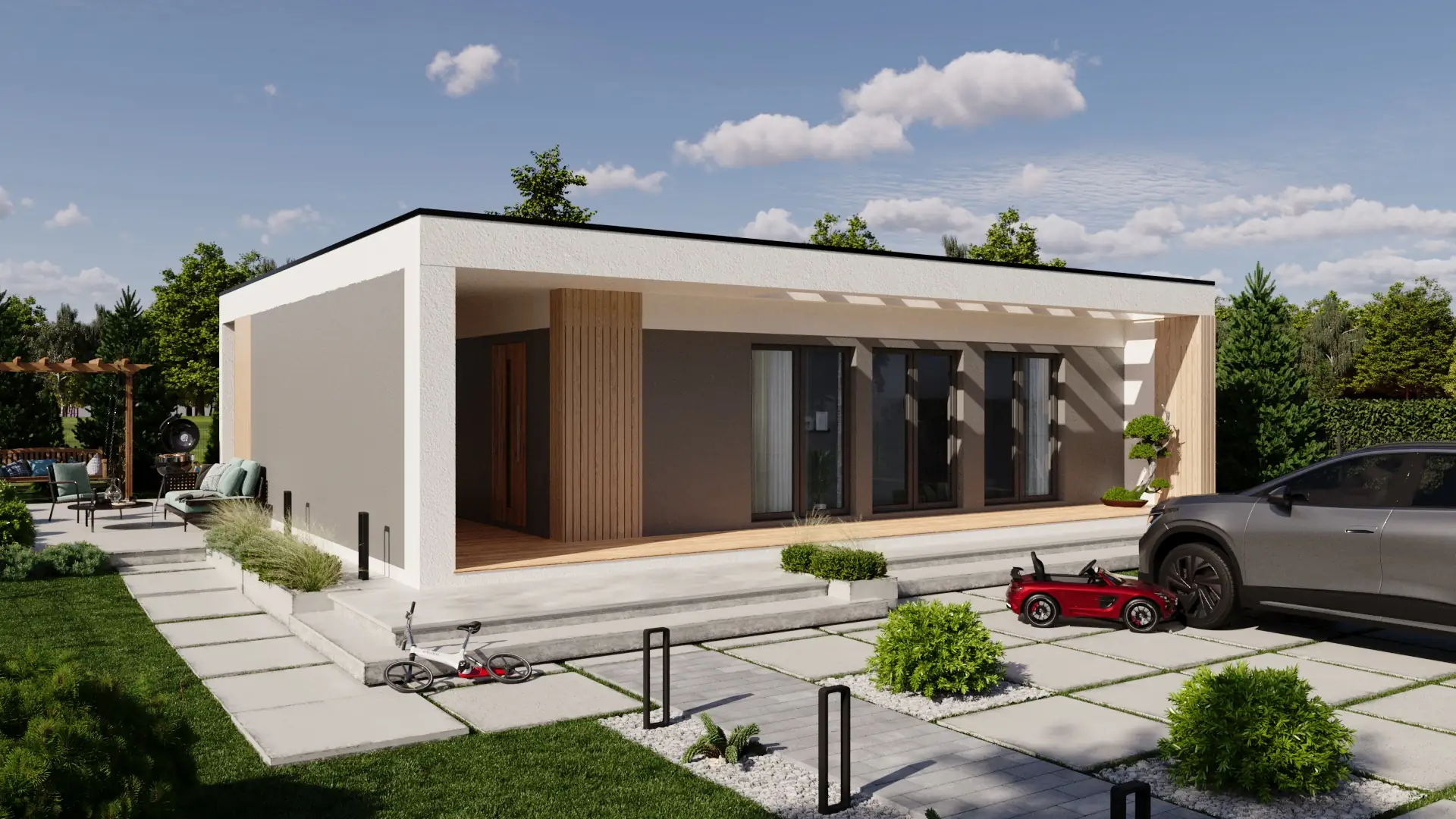
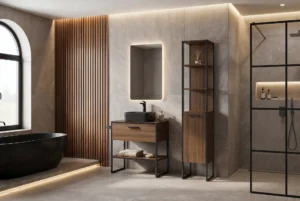
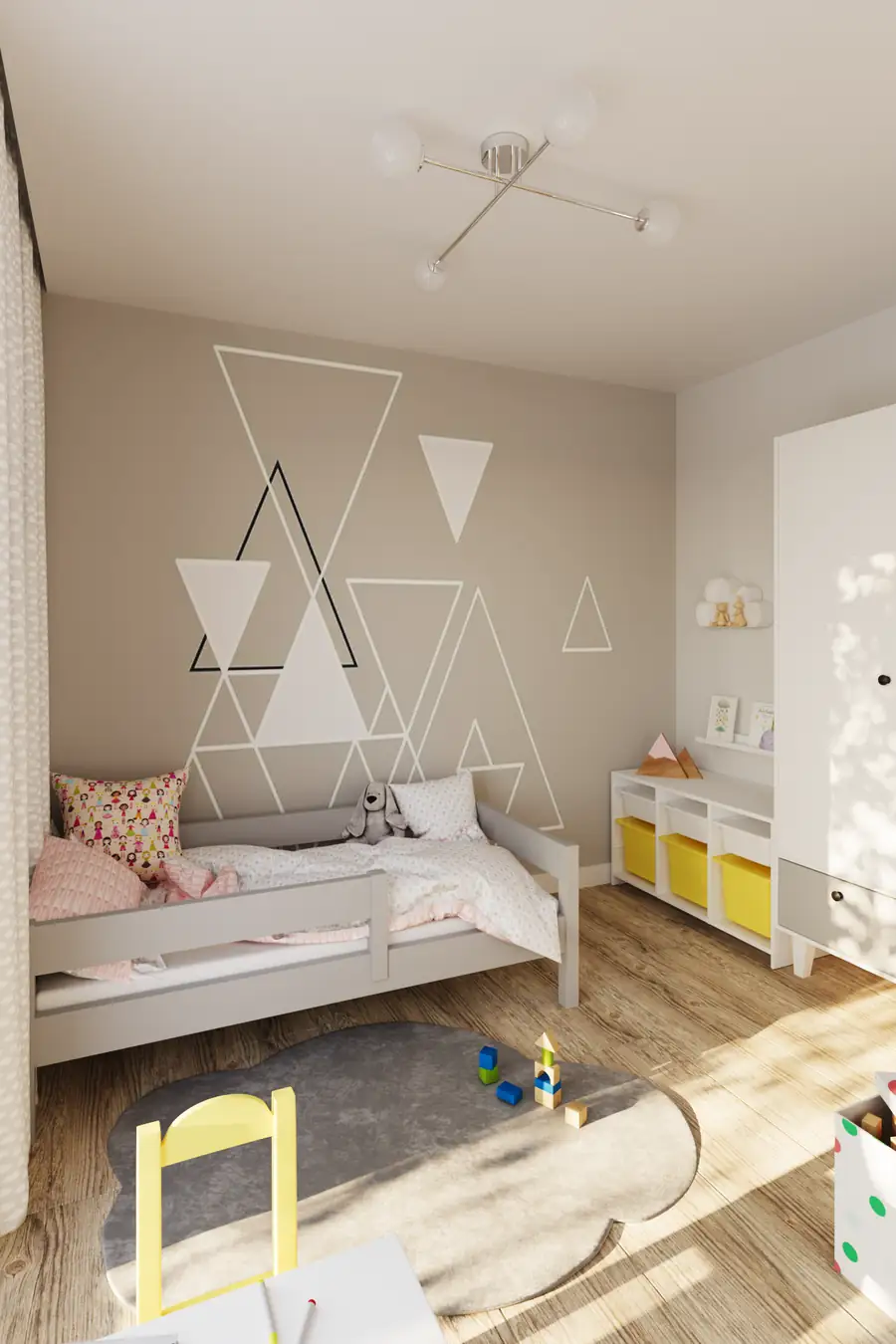
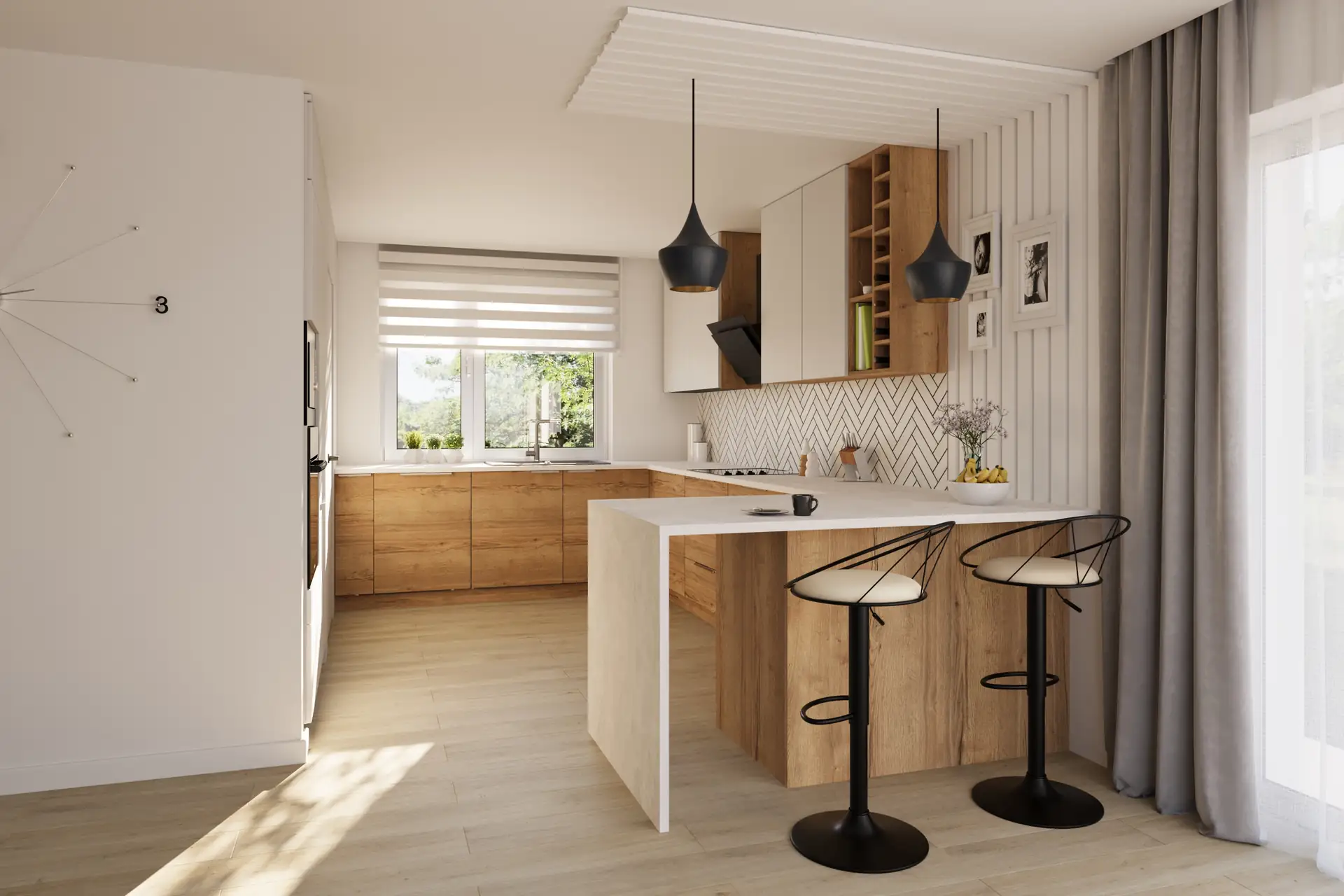
For each house we prepared two or three exterior views, two interiors and an exterior animation. With the interiors we watched one thing: for each house we chose different rooms from the previous one. So after four houses the Unno website had the full set: several bedrooms, several bathrooms, kitchens, living rooms and children’s rooms, rather than the same living room four times.
Five New Designs in a Consistent Brand Style
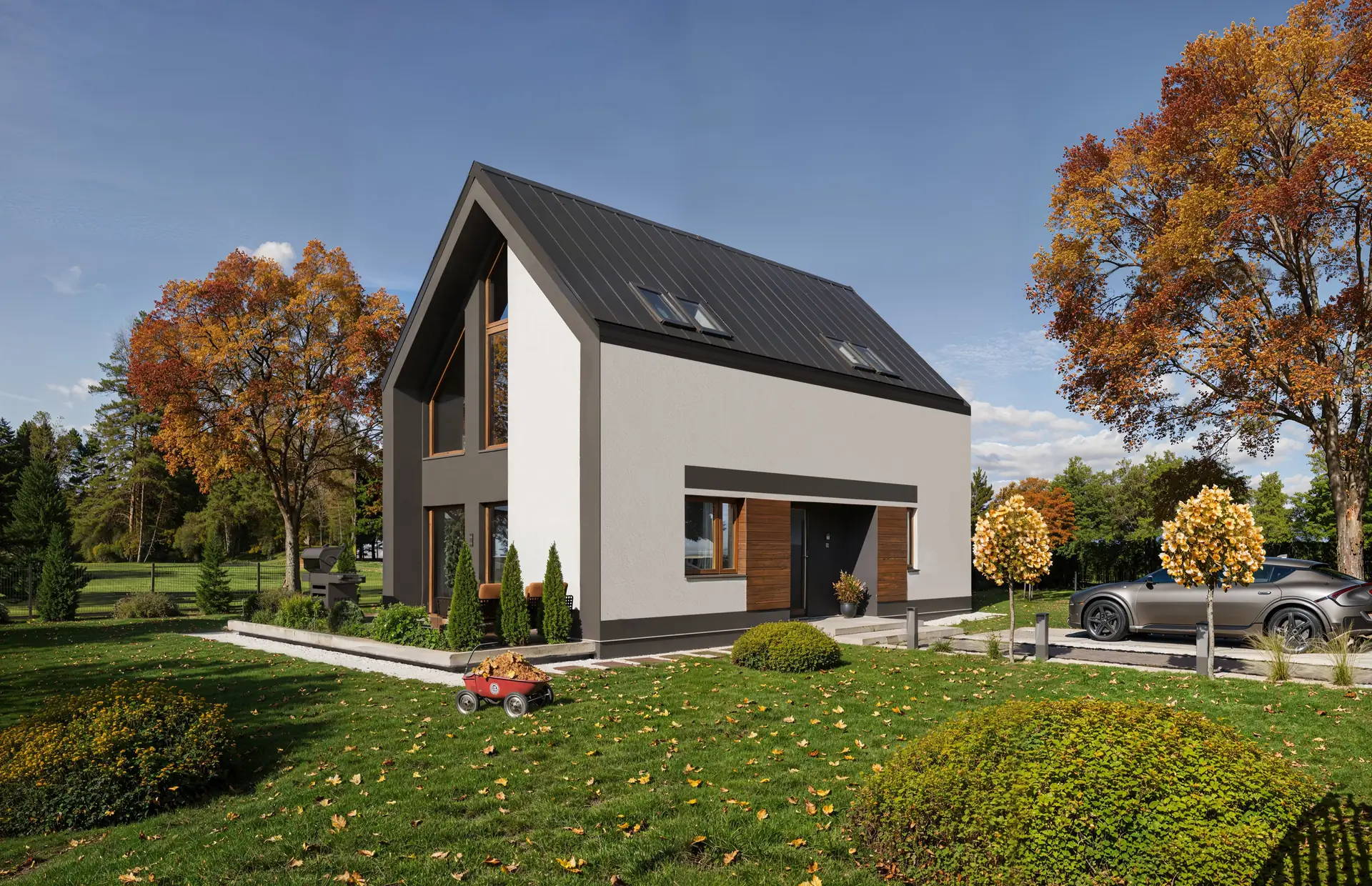
After the first series Unno designed five new houses to replace the earlier ones. They were better optimised and cheaper to build. The company took a closer look at its customers and tailored the designs to what they were actually looking for.
For the new houses we produced similar packages: exterior views, interiors and animations, in the same style as the first series, so the whole range looked like one brand.
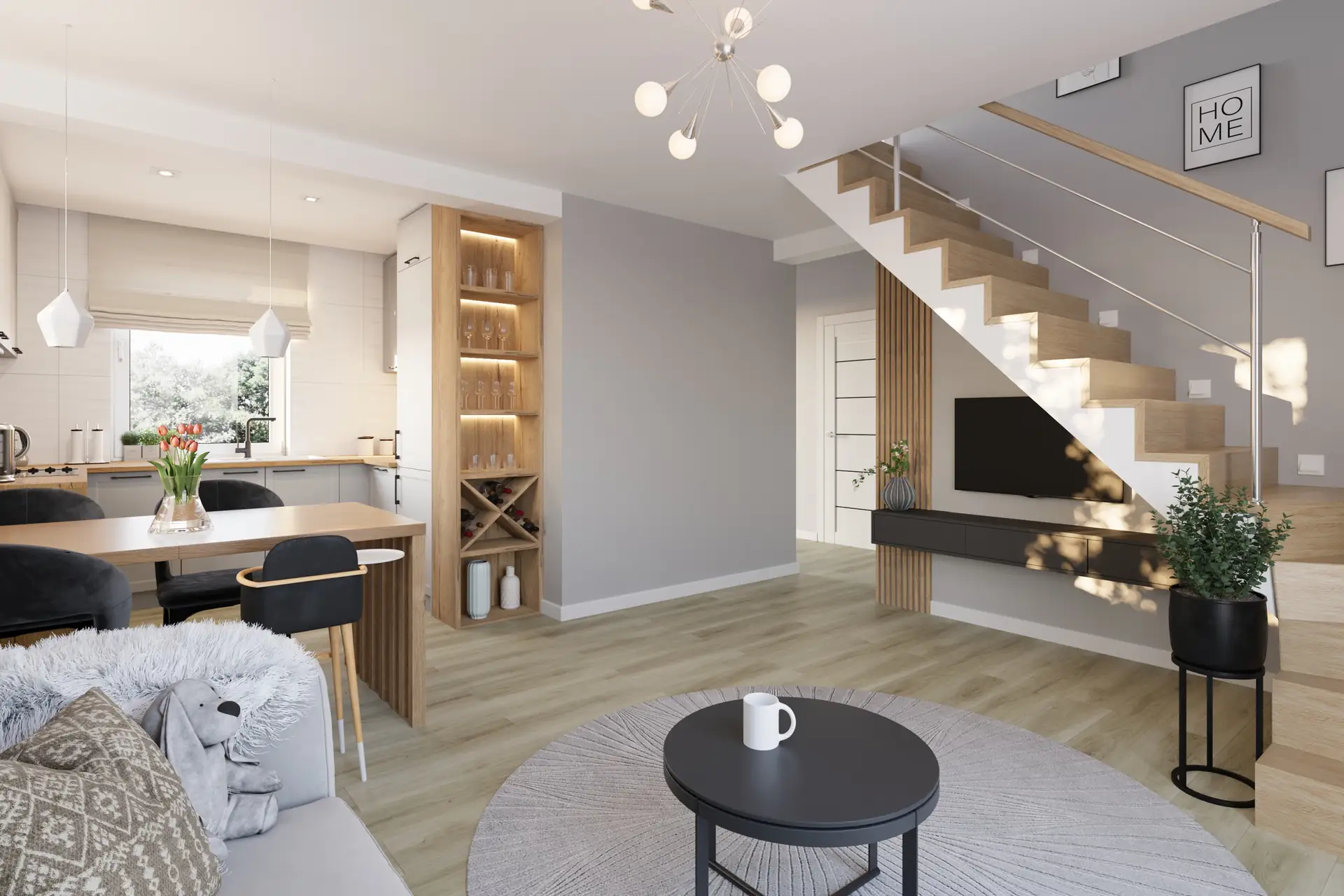
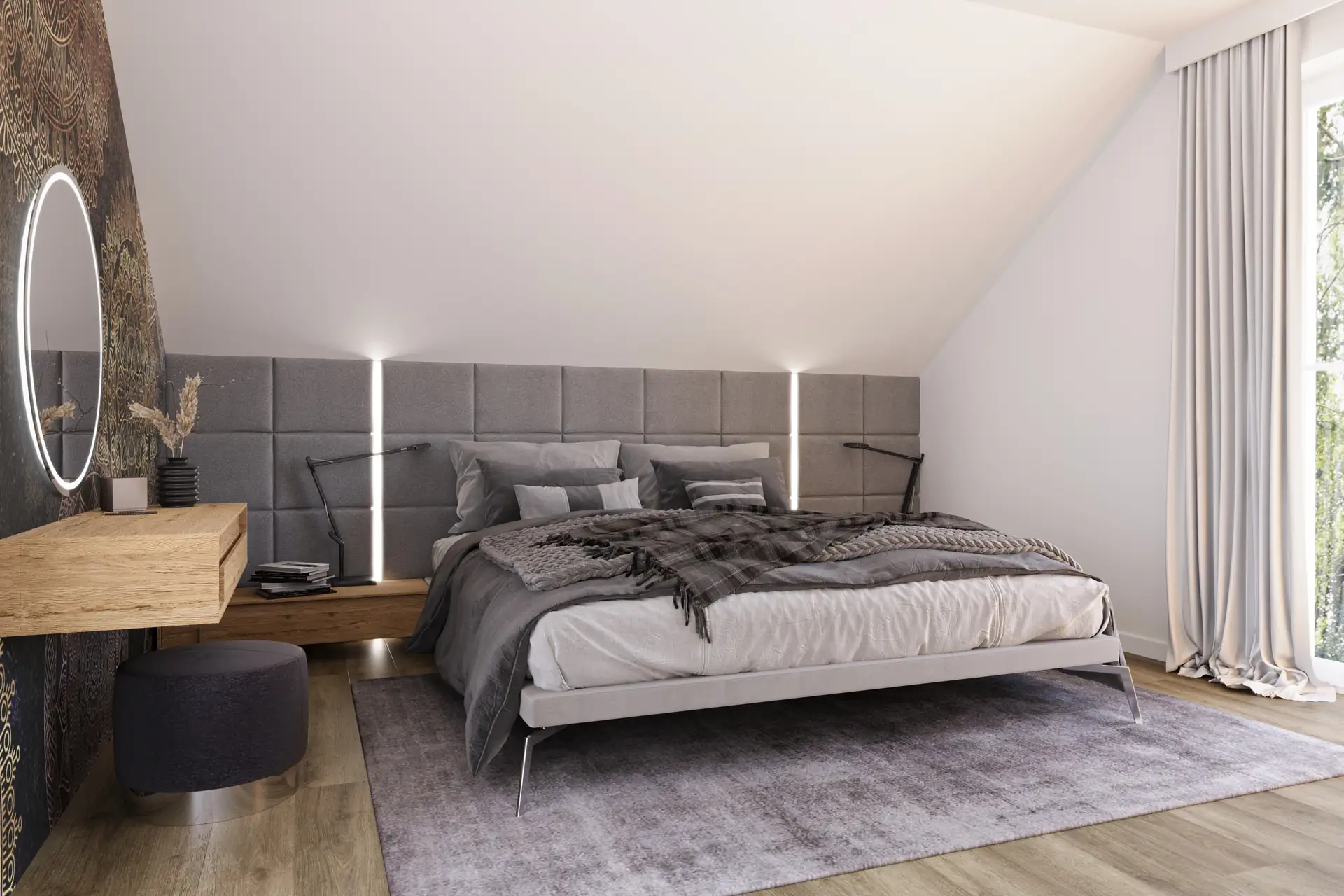
This series sparked an idea that changed the way the homes were sold: a configurator. More on that shortly, but first, the film.
An Interior Animation Instead of a Show Home
When Unno started selling, it didn’t have a show home yet. Buyers could look at floor plans and renders, but they couldn’t walk inside and see what the space was really like.
An interior animation closed that gap. The camera moves through the whole house, room by room: you can see how big the living room is, how the kitchen connects to the dining area, where the stairs are and how much space there is in the bedrooms. For someone about to spend around PLN 200,000 on a house that doesn’t exist anywhere yet, that was the most important answer.
Each design also got a 3D animation of the exterior. Films like these work better on social media and at trade fairs than a single image, because they show the house from every side.
A Configurator Built on Dynamically Swapped PNG Layers
Unno homes are built to set designs, but buyers can choose the finish. The facade can be left with just the base coat or fully painted in several colours. Then there are window options, roofing and a few other elements. The question was: how do you show every combination without producing hundreds of separate renders?
The answer was a configurator built from layers. The background is a photorealistic render of the surroundings that never changes. On top of it sit separately rendered layers of the building: facade, windows, roof and other elements, each as a PNG file with a transparent background. When the buyer chooses an option, the configurator swaps the relevant layer.
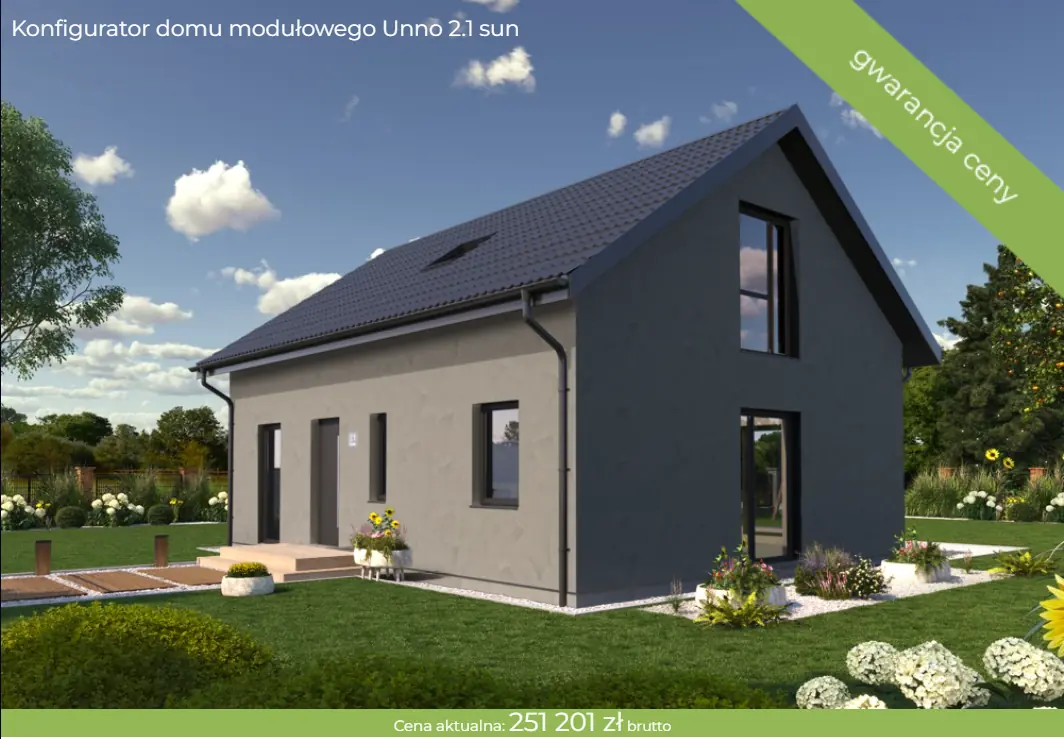
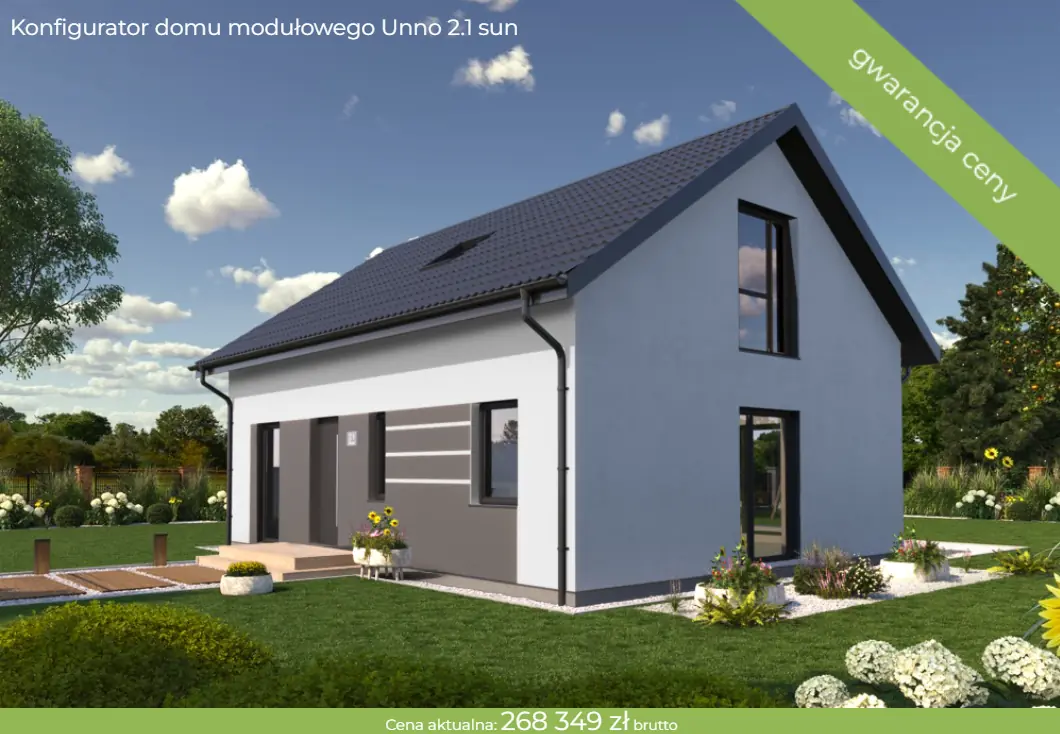
Buyers see not only how the house changes but also what their choice costs. The finish decision stops being an abstract line in a price list.
The shadows were the hardest part. Every layer had to contain not just the element itself but also the shadow it casts on other parts of the house and the surroundings. Without that, the roof would look stuck onto the photo. With the shadow, every combination looks like one seamless render.
For houses this approach has a big advantage over a real-time configurator. The quality is the same as the renders, because they are renders, and the finished images load quickly even on a phone. It works when the number of variants is reasonable, which is exactly the case with set house designs. You can see how it works in the Unno configurator. We explain more about the solutions we build on our page about 3D configurators.
The Result
The first Unno homes sold before the show home was built. Buyers bought on the strength of the renders, the animations and the interior film.
The entire Unno website is built on our renders, and it still sells. The same material works on social media and at trade fairs. One set of renders covers every channel where the brand talks to its customers.
I worked with Lightvision when we were launching sales of Unno timber-frame houses. At that point we didn’t have a single physical house to show. We ordered exterior renders of every design and 3D animations of the exteriors and interiors. Together we also built a 3D house configurator. At the start, that was almost our entire marketing.
Agnieszka Guzy-Orawczak, Google review (translated from Polish)
Today we have plenty of homes built and our own show homes, and we still go back to that material. It still sells, even though we now have real projects to show.
A creative, approachable team, always happy to collaborate, and communication is always smooth. I recommend them without hesitation!
Renders for Prefab House Manufacturers
If you sell homes built to set designs, you have the same problem as Unno: buyers need to see a house that doesn’t exist yet. House visualisation, animations and a configurator solve it at every stage, from the first website visit to the choice of finish.
Send us your house designs and we will reply with a quote and a timeline.